Development and Humanitarian Response Effectiveness Assessment
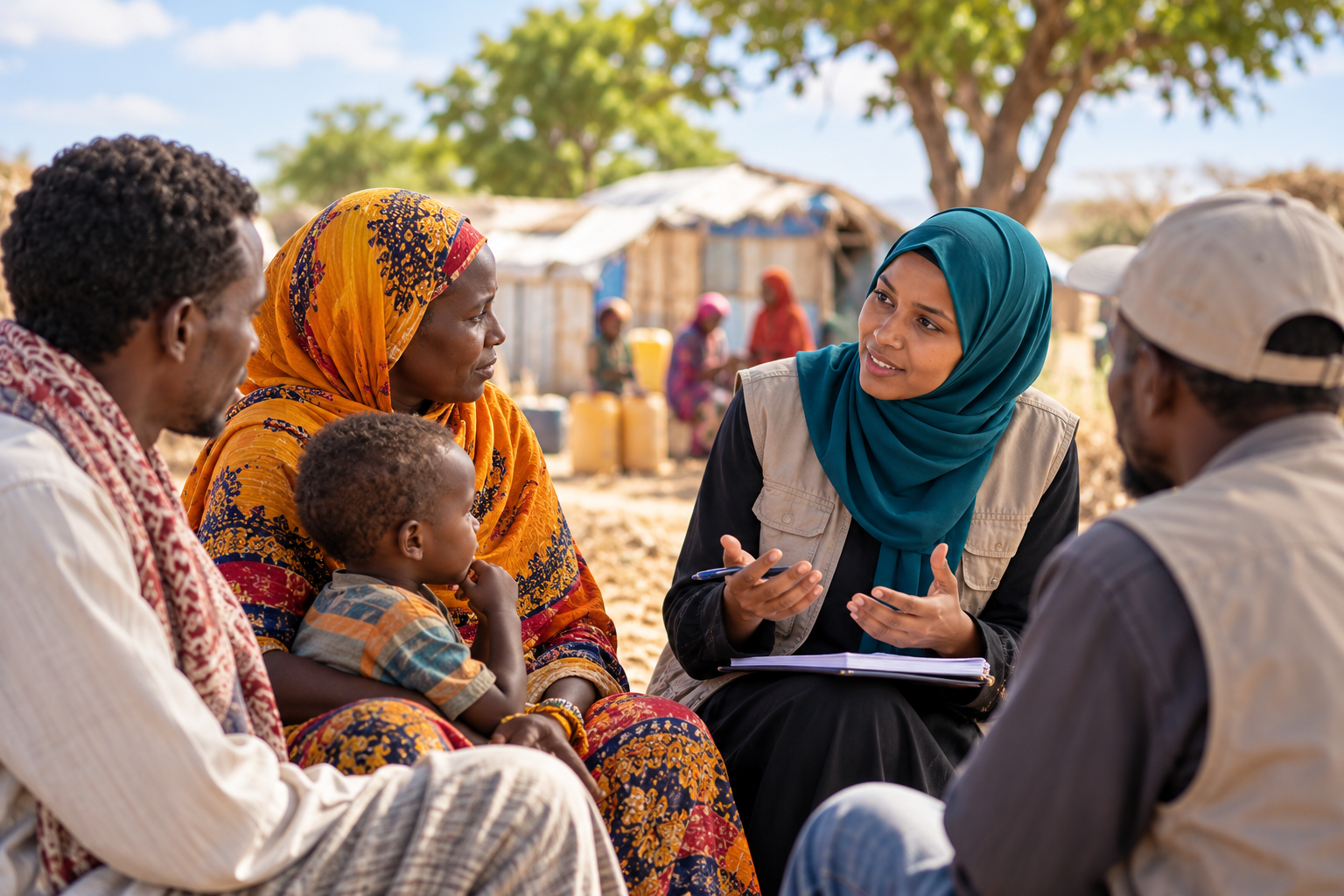
About the Research
Understanding the context, questions and approach behind this research.
Background
Somalia continues to experience complex humanitarian and development challenges that affect communities in different ways. Humanitarian assistance, recovery initiatives and longer-term development programmes operate within environments shaped by displacement, vulnerability, limited access to basic services, climate-related pressures and changing livelihood conditions.
Understanding whether interventions are responding effectively to community needs requires systematic assessment of programme relevance, implementation, participation, sustainability and perceived outcomes.
Research Purpose
This study seeks to examine how development and humanitarian interventions respond to identified community needs and how effectively they contribute to improved conditions, resilience and longer-term development outcomes.
The research will generate evidence that can help stakeholders better understand what is working, where gaps remain, and how future interventions can become more responsive and sustainable.
Objectives
The study aims to:
- Assess the relevance of selected development and humanitarian interventions to community needs.
- Examine how interventions are implemented within their local contexts.
- Explore community participation and perceptions of programme effectiveness.
- Identify implementation challenges and gaps.
- Examine factors that influence the sustainability of interventions.
- Consider whether interventions are reaching different population groups equitably.
- Identify lessons that can inform future humanitarian and development programming.
Key Issues / Research Questions
The research will explore questions including:
- To what extent do interventions respond to the priorities and needs identified by communities?
- How do communities perceive the effectiveness of humanitarian and development programmes?
- What factors influence successful implementation?
- What barriers affect programme delivery and access?
- How effectively are communities involved in programme planning and implementation?
- What factors influence the sustainability of programme outcomes?
- Are different population groups experiencing interventions and services equitably?
- What lessons can be applied to improve future programming?
Methodology
The study will use a mixed-methods approach appropriate to the selected research context and assessment objectives.
Potential methods may include:
- Review of relevant programme and secondary information
- Key informant interviews
- Focus group discussions
- Community consultations
- Stakeholder interviews
- Structured surveys where appropriate
- Qualitative and quantitative analysis of collected evidence
The research will seek to incorporate perspectives from communities, programme stakeholders and other relevant actors. Data collection and analysis will follow appropriate ethical principles, including informed participation, confidentiality and respect for participants.
The specific sampling strategy and research instruments will be determined according to the geographical scope, population and objectives of the assessment.
Findings
The study is ongoing. Findings are not yet available.
Findings will be documented following completion of data collection, analysis and validation. Where appropriate, key findings will be communicated through ISDR research and knowledge products.
Outcomes / Impact
The study is expected to generate evidence that can contribute to improved understanding of humanitarian and development programming in Somalia.
The evidence may support:
- More responsive programme design
- Better alignment between interventions and community priorities
- Improved community participation
- Identification of implementation gaps
- Stronger consideration of sustainability
- More evidence-informed decision-making
- Improved learning across humanitarian and development programmes
ISDR Research Perspective
The study reflects ISDR's commitment to rigorous, impartial and evidence-based research that supports better understanding, stronger decision-making and practical improvements in development and humanitarian programming.
Related Publications
Looking for research and evidence to support your work?
ISDR works with organisations to generate evidence, strengthen understanding and inform better decisions.